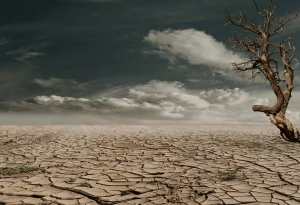

Africa is on the frontlines of climate change. From droughts hitting smallholder farmers in Mozambique, to floods washing away businesses in Nigeria, to unpredictable weather threatening power supply and transport across the continent — climate risks are no longer a future problem. They’re today’s business reality.
But every risk brings opportunity. The climate crisis is sparking a new wave of innovation and investment — and small and medium enterprises (SMEs) are right at the centre of it.
Green finance isn’t just a moral choice, but a competitive advantage.
The Wake-Up Call: Climate Change Is a Business Issue
For too long, climate change has been seen as an “NGO issue” or something for scientists to worry about. But look around:
- Farmers are facing reduced yields.
- Manufacturing is being disrupted by power shortages.
- Tourism is getting impacted by rising temperatures and unpredictable seasons.
If you run a business in Africa, climate change affects your supply chain, your customers, and your bottom line.
So the real question isn’t “Should I care?” but “How do I adapt and thrive?”
Green Finance 101 — What It Really Means
Green finance simply means funding that supports projects and businesses that benefit the environment or help people adapt to climate impacts.
That includes:
- Renewable energy (solar, wind, mini-grids).
- Waste management and recycling.
- Water conservation and irrigation tech.
- Climate-smart agriculture.
- Eco-friendly construction.
- Clean transport and logistics.
The idea is simple: money flows where sustainability grows. And global investors are shifting billions of dollars into green portfolios. The challenge is making sure African SMEs can tap into that flow.
Why Is It Necessary for SMEs?
Going green doesn’t just help the planet, it helps your business:
- Cuts costs: Solar power, for instance, can slash your energy bills by up to 60%.
- Attracts investors: Impact funds, development banks, and climate finance institutions love green projects.
- Builds resilience: Climate-smart practices protect your business from shocks like droughts or floods.
- Boosts your brand: Customers increasingly prefer eco-conscious businesses.
In other words — sustainability isn’t a “nice to have.” It’s smart business strategy.
The Climate Finance Gap — and Opportunity
Right now, Africa receives less than 5% of global climate finance, even though it’s the region most affected.
That’s the gap entrepreneurs can help close. The continent needs local innovators who can translate big global goals into practical, investable solutions — clean cooking, water recycling, sustainable housing, and more.
The opportunity? Massive.
Forms of Green Finance SMEs Can Access
- Green Loans and Credit Lines: Some banks and microfinance institutions now offer loans specifically for green projects. Some examples are Equity Bank Kenya’s Ecomoto Loan (for clean energy products) and NMB Bank Tanzania’s Green Loan for renewable energy and water systems
- Grants and Impact Funds: The following organizations offer funding to projects that improve energy access, promote resilience, or reduce emissions. Global Environment Facility (GEF), SEFA (Sustainable Energy Fund for Africa), Green Climate Fund (GCF), AECF (Africa Enterprise Challenge Fund).
- Carbon Financing: Businesses that reduce or absorb carbon (e.g. reforestation, clean cookstoves) can earn carbon credits and sell them on international markets.
- Crowdfunding and Green Investment Platforms: Sites like Thundafund, Trine, or Bettervest allow entrepreneurs to raise funds from individuals who want to back sustainable ideas.
How SMEs Can Become “Investment-Ready”
Accessing green finance isn’t about buzzwords — it’s about proof. And here’s what investors and financiers look for:
- A clear climate link: Show how your product or process reduces emissions or builds resilience.
- Solid business model: Sustainability alone isn’t enough; it must make financial sense.
- Impact data: Be ready to measure your results — energy saved, waste recycled, livelihoods created.
- Governance and transparency: Investors want accountability. Keep your records clean.
Align your impact with the UN Sustainable Development Goals (SDGs) — it speaks the language funders understand.
Practical Steps to Green Your Business
You don’t need to be a climate scientist to start adapting. Here’s how SMEs can take simple, meaningful steps:
- Audit your energy use: Switch to efficient bulbs, solar, or hybrid systems.
- Reduce waste: Recycle materials, minimise packaging, reuse water where possible.
- Source locally: Cuts emissions and supports local economies.
- Eco-innovate: Find creative ways to reuse by-products or design with sustainability in mind.
- Educate your customers: Build loyalty by showing how your enterprise protects the planet.
Each small change compounds into measurable impact — and funders love that.
African Success Stories
Solar Sister (Nigeria, Tanzania, Uganda): Empowers women to distribute solar lanterns and clean cookstoves in off-grid areas — combining gender empowerment with clean energy access.
M-KOPA (Kenya): Provides pay-as-you-go solar energy solutions to low-income households. Its model has powered millions of homes and cut millions of tonnes of carbon emissions.
Baobab+ (Senegal): Uses microfinance and digital tools to expand access to clean energy in rural communities.
AquaRecycle (South Africa): Helps hotels and laundries save water and energy through innovative recycling systems.
These businesses prove that green models don’t just survive — they scale.
The Role of Policy and Ecosystems
Governments and financial institutions play a key role in expanding green finance. They can:
- Provide tax incentives for sustainable businesses.
- Support green credit guarantee schemes to de-risk lending.
- Simplify approval processes for renewable energy and recycling ventures.
- Promote green procurement — rewarding eco-friendly suppliers.
Regional initiatives like the African Development Bank’s Green Growth Framework and Climate Investment Funds are helping, but more needs to reach the grassroots.
The Entrepreneur’s Mindset Shift
The real game-changer isn’t money — it’s mindset. Stop seeing climate adaptation as “extra work.” See it as business evolution. Ask yourself:
- How can I future-proof my business against climate shocks?
- How can I turn environmental challenges into opportunities?
- How can I partner with others to access green finance?
Entrepreneurs who think this way won’t just survive — they’ll lead.
Common Mistakes to Avoid
- Greenwashing. Don’t exaggerate your sustainability claims — funders will check.
- Ignoring numbers. If you can’t show financial viability, even the greenest idea won’t attract funding.
- Neglecting partnerships. Climate adaptation requires collaboration — with NGOs, banks, and government.
- Waiting for perfection. You don’t need a big climate strategy to start — take one step today.
The Future of Green Finance in Africa
Here’s what’s exciting — Africa isn’t just catching up; it’s setting trends.
The rise of climate tech startups (like WEEE Centre, Kenya).
Carbon farming and regenerative agriculture gaining traction.
Green bonds financing public and private sustainability projects.
Youth-led innovation hubs turning climate anxiety into climate action.
As global investors look for genuine impact, Africa is fast becoming the next big frontier for green entrepreneurship.
Final Thoughts: From Risk to Resilience
Climate change is rewriting the rules of business — but it’s also rewriting the rules of opportunity.
SMEs that adapt early, innovate sustainably, and tap into green finance will lead the next growth wave across Africa.
The future belongs to the entrepreneurs who understand that the best way to survive disruption is to create solutions for it.