
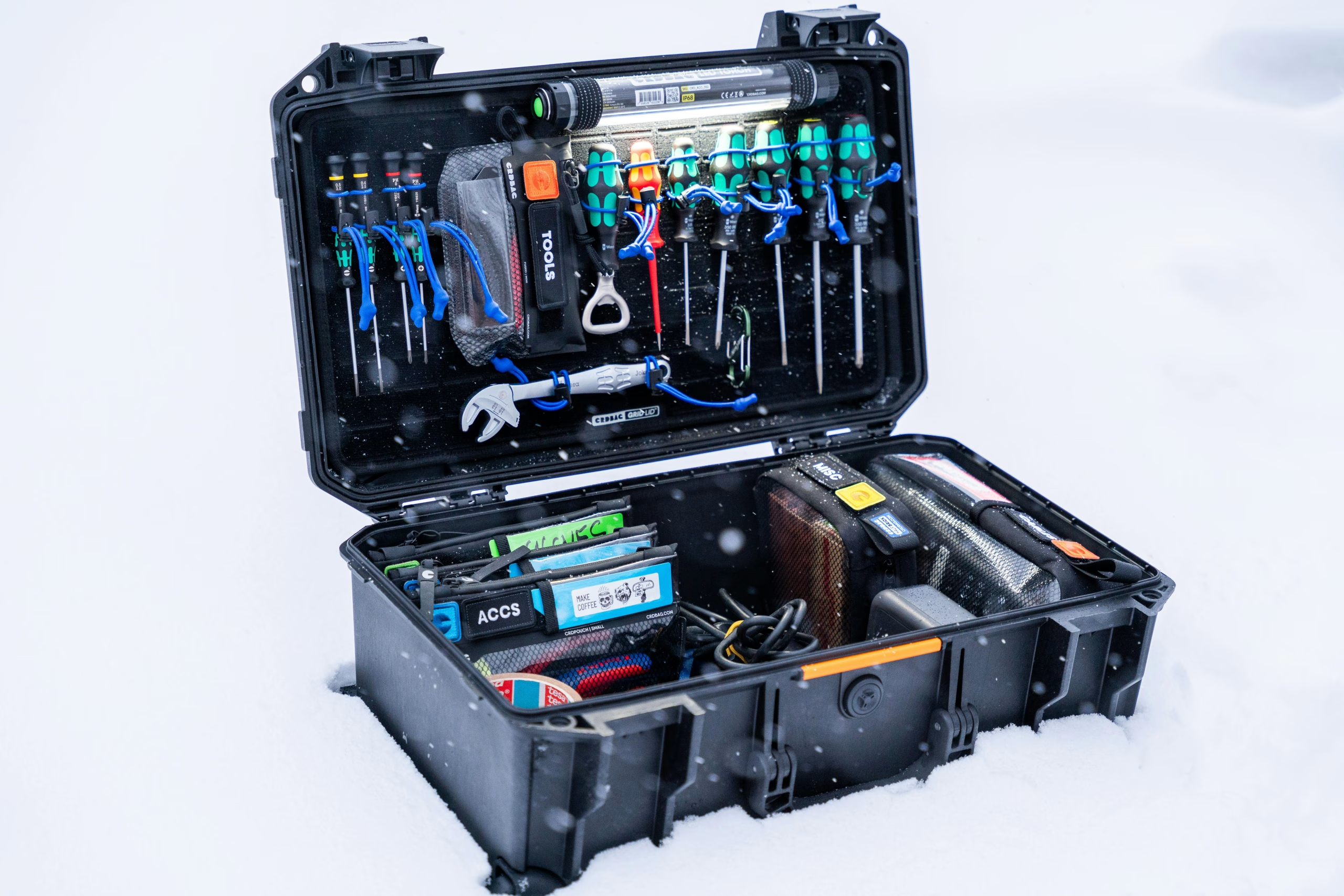

Launching a startup is like venturing into the wild—exciting, unpredictable, and full of challenges that can either make or break you. Imagine being dropped into a dense jungle with no map, no gear, and no idea where to go. The odds of survival? Slim.
Now, picture yourself with a high-tech survival kit: a GPS to navigate, a machete to clear obstacles, and food rations to keep you going. The difference? Night and day.
The same principle applies to startups. Having the right tools can mean the difference between thriving and barely surviving. In today’s world, with AI-driven automation, remote collaboration, and ever-evolving market trends, entrepreneurs need a robust toolkit to stay ahead. This guide breaks down the must-have tools every startup should use, categorized by function, with real-world examples to show how they can make or break your business.
Business Planning & Strategy
Tool: Notion – The Ultimate Startup Dashboard
Before you even think about funding or marketing, you need a solid plan. Notion is a game-changer for entrepreneurs who need an all-in-one workspace to organize their ideas, business models, and execution strategies.
Sarah, the founder of a sustainable fashion brand, used Notion to create a dynamic business plan. She linked financial projections, competitor research, and production timelines in one place. This helped her stay on track and secure investors who were impressed by her detailed yet agile strategy.
Tool: LivePlan – Business Planning Made Easy
For those who need a more structured approach to business planning, LivePlan simplifies financial modeling and business plan creation.
A tech startup founder preparing for a pitch competition used LivePlan to generate financial forecasts. The tool’s intuitive design helped him create a compelling pitch deck, which secured his company a $500,000 investment.
Funding & Financial Management
Tool: Stripe – Payment Processing Simplified
Stripe has become the gold standard for online payments. Whether you’re selling products, services, or subscriptions, this tool ensures smooth transactions.
A fitness startup launched an online personal training platform. By integrating Stripe, they were able to accept payments from clients worldwide seamlessly, scaling their business from 10 to 1,000 clients in under a year.
Tool: Brex – A Startup-Friendly Business Bank Account
Startups need flexible banking solutions, and Brex offers corporate credit cards with no personal guarantees, rewards tailored for startups, and seamless expense tracking.
A SaaS founder used Brex to cover initial marketing expenses without dipping into personal savings. The Brex dashboard helped track spending, ensuring the startup stayed within budget.
Tool: QuickBooks – Financial Management for Growth
Keeping track of cash flow is critical. QuickBooks offers automated bookkeeping, invoicing, and tax prep, making it a must-have for any startup.
A small e-commerce business avoided a financial crisis by using QuickBooks to identify unnecessary expenses, ultimately increasing their profit margins by 20%.
Collaboration & Communication
Tool: Slack – The Startup HQ
Forget email overload—Slack keeps teams connected through organized channels, integrations, and real-time messaging.
A remote-first marketing agency uses Slack to streamline communication between team members across three time zones. By integrating Slack with project management tools, they cut email volume by 70% and improved response times.
Tool: Zoom & Google Meet – Virtual Meetings Made Easy
Remote work is here to stay. Zoom and Google Meet ensure seamless video conferencing, whether you’re pitching investors or collaborating with global teams.
A bootstrapped SaaS startup relied on Zoom for investor pitches, securing $1 million in funding without ever meeting investors in person.
Tool: Loom – Asynchronous Communication
Sometimes, a quick video message is more effective than a long email. Loom lets entrepreneurs record their screen and voice to explain concepts clearly.
A product manager at a growing tech startup used Loom to walk developers through new feature requests, reducing back-and-forth emails by 50%.
Marketing & Growth
Tool: HubSpot – CRM & Marketing Automation
Startups need to build and nurture customer relationships efficiently. HubSpot offers free CRM, email marketing automation, and sales pipeline tracking.
A B2B startup used HubSpot to automate email follow-ups, increasing lead conversion rates by 40%.
Tool: Canva – Design Made Simple
Not every startup can afford a graphic designer. Canva allows founders to create professional-looking social media graphics, presentations, and marketing materials with ease.
A solopreneur running an online boutique used Canva to design Instagram posts, leading to a 300% increase in engagement.
Tool: Buffer – Social Media Management
Consistency is key in social media marketing. Buffer helps startups schedule posts and track performance across multiple platforms.
A food delivery startup scheduled a month’s worth of social content in advance, freeing up time to focus on customer experience.
Productivity & Time Management
Tool: Trello – Visual Project Management
Startups juggle multiple projects. Trello offers a drag-and-drop interface to manage tasks, deadlines, and priorities.
A co-founder of a growing SaaS company used Trello to manage development sprints, ensuring the team stayed on track for product launches.
Tool: Calendly – Scheduling Without the Back-and-Forth
Stop wasting time coordinating meetings. Calendly lets clients and team members book slots based on your availability.
A sales rep at a startup used Calendly to schedule customer calls, increasing conversion rates by 25% since prospects could easily find a time that worked.
AI & Automation
Tool: ChatGPT & Jasper – AI Content Creation
Startups often struggle with content creation. ChatGPT and Jasper help generate blog posts, emails, and marketing copy.
A startup founder with no writing background used Jasper to draft blog content, doubling organic traffic in six months.
Tool: Zapier – Automate Everything
Zapier connects apps and automates repetitive tasks, saving startups countless hours.
A co-founder automated lead collection from Facebook Ads to Google Sheets using Zapier, reducing manual data entry by 90%.
Customer Support & Engagement
Tool: Intercom – AI-Powered Customer Support
Early-stage startups can’t afford large support teams. Intercom offers AI chatbots and live chat to handle customer inquiries.
A fintech startup reduced support response time by 60% using Intercom’s chatbot, leading to happier customers.
Tool: Typeform – Engaging Surveys & Feedback
Understanding your customers is crucial. Typeform creates interactive surveys that drive engagement.
A wellness startup used Typeform to gather customer feedback, refining their product based on responses.
Final Thoughts: Build Your Startup Arsenal
In the fast-paced world of startups, the right tools can be your competitive advantage. Whether it’s automating marketing, streamlining communication, or managing finances, these tools help founders focus on what really matters—building a successful business.
The best entrepreneurs aren’t just dreamers; they’re equipped with the right tools to turn their vision into reality.
So, what’s in your survival kit for 2025?
