
Across Africa, smallholder farmers feed the continent — yet they remain some of its poorest citizens. They grow most of our food, but struggle to access credit, insurance, and fair markets. For decades, the problem has been clear: rural farmers are invisible to the financial system. They lack credit histories, collateral, and access to banks that understand their needs. But a quiet revolution is underway. Mobile phones, data, and digital platforms are rewriting the rules — making it possible to bank the unbanked and give farmers the financial tools they need to grow, adapt, and thrive. Let’s explore how tech-enabled financial inclusion is transforming agriculture and opening doors for millions of smallholders across Africa.
The Challenge: Farming Without Finance
Most smallholders operate in cash economies. That means:
- No bank accounts.
- No digital records of income or expenses.
- No access to credit for seeds, fertilizer, or equipment.
- No safety nets when crops fail due to drought or pests.
As a result, they stay trapped in a cycle of low productivity and vulnerability. Banks see them as too risky. Farmers see banks as too far away. And both lose out.
Enter Technology: The Great Equalizer
The rise of mobile technology has changed everything. Mobile phones are now more common in rural Africa than electricity. And they’re not just for communication — they’re becoming financial lifelines. Through mobile money, data analytics, and agri-fintech platforms, smallholders can now:
- Save safely.
- Receive payments instantly.
- Get small loans tailored to their needs.
- Buy inputs digitally.
- Access crop insurance and market information.
It’s not just inclusion — it’s empowerment.
The Building Blocks of Digital Inclusion
To understand how this transformation works, let’s break down the tech ecosystem driving it.
Mobile Money Platforms
Services like M-Pesa (Kenya), MTN Mobile Money (Uganda, Ghana), and Airtel Money have made rural transactions simple, fast, and secure. Farmers can now receive payments for produce directly to their phones — no middlemen, no delays, no theft.
Digital Credit and Microloans
Platforms like Tala, Branch, and Pezesha analyze mobile data to offer microloans — even without traditional credit histories. In agriculture, lenders like Apollo Agriculture (Kenya) and Farmerline (Ghana) use satellite data and AI to assess risk and offer affordable input credit.
Digital Savings Groups
Traditional savings groups (chamas, SACCOs) are going digital through apps like Chamasoft and Tanda, allowing transparent record-keeping and easier access to credit.
Insurtech for Agriculture
Companies like Pula and Acre Africa use weather data and satellite imagery to design affordable crop insurance — protecting farmers from droughts, floods, and pests.
Market Linkage Platforms
Platforms such as Twiga Foods, mFarm, and AgroCenta (Ghana) connect farmers directly to buyers, reducing post-harvest losses and improving prices.
Together, these tools form an ecosystem of inclusion.
Real-Life Transformations
Case 1: Apollo Agriculture (Kenya)
Apollo uses AI and remote sensing to offer smallholders bundled packages — seeds, fertilizer, insurance, and credit — paid via M-Pesa.
Impact: Farmers increase yields by up to 50%, with repayment rates exceeding 90%.
Case 2: Pula (Africa-wide)
By combining data analytics and insurance, Pula has insured over 15 million farmers across 20+ countries, cushioning them from climate shocks.
Case 3: Farmerline (Ghana)
Farmerline provides mobile training, weather forecasts, and input financing — helping farmers make smarter decisions and access better markets.
Case 4: Hello Tractor (Nigeria, Kenya)
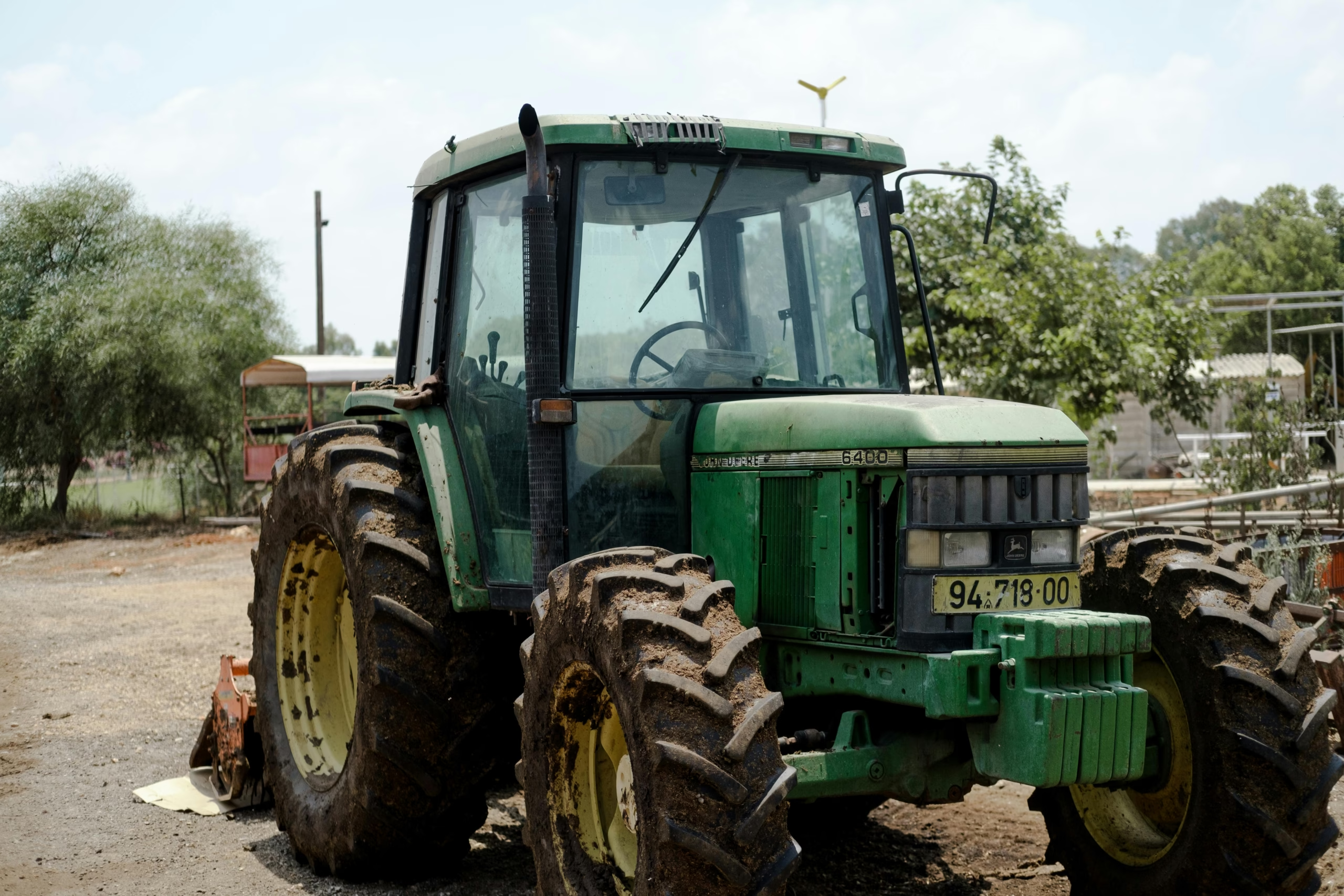
Think of it as “Uber for tractors.” Smallholders can rent tractors via SMS — boosting productivity while avoiding heavy capital costs.
These aren’t just apps. They’re lifelines.
Why It Works
Digital finance succeeds where traditional banking failed because it’s:
- Accessible: Mobile phones break distance barriers.
- Data-driven: Algorithms replace collateral.
- Scalable: One platform can reach thousands of users.
- Affordable: Digital systems cut transaction costs.
- Inclusive: Women and youth — long excluded — can now participate easily.
It’s finance built for the realities of African life.
The Gender Advantage
Women make up over 50% of Africa’s agricultural workforce, yet they’re often the most excluded from formal finance. Digital solutions level the field by:
- Allowing direct payments to women’s phones.
- Providing financial literacy through mobile training.
- Offering microloans without collateral (since women often lack land titles).
Platforms like Musoni Microfinance and FINCA Impact Finance are leading the way — proving that women are not just good borrowers, they’re the best borrowers.
The Role of Partnerships
No single player can achieve inclusion alone. The success stories we’ve seen happen through collaboration between:
- Fintechs (innovation and platforms)
- Telecoms (infrastructure and reach)
- Banks (capital and compliance)
- Governments (regulation and support)
- NGOs (capacity building and outreach)
When these partners align, the ecosystem becomes unstoppable.
Example: Kenya’s One Million Farmers Platform brings together agribusinesses, data providers, and fintechs to deliver financial and digital solutions at scale.
Barriers That Still Exist
Inclusion isn’t complete yet. Challenges remain:
- Digital literacy gaps in rural areas.
- Limited connectivity in remote regions.
- Trust issues with new tech systems.
- Gender gaps in phone ownership and financial access.
- Regulatory hurdles that slow fintech innovation.
But each challenge is also a business opportunity for entrepreneurs building locally tailored solutions.
The Climate Connection
Tech-enabled financial inclusion isn’t just about money — it’s about climate resilience. When farmers can access insurance, loans, and savings, they can:
- Invest in drought-resistant seeds.
- Diversify income sources.
- Recover quickly after disasters.
That’s how finance becomes adaptation — and technology becomes survival.
What Entrepreneurs Can Learn
If you’re building or supporting a social enterprise in agri-finance or inclusion, here’s your roadmap:
- Understand the pain points. Don’t just build tech — solve real farmer problems.
- Keep it simple. Many users still use basic phones — SMS can be more powerful than an app.
- Partner wisely. Work with cooperatives, SACCOs, and input suppliers.
- Build trust. Start small, demonstrate reliability, and scale gradually.
- Measure impact. Show how your solution improves livelihoods — not just transaction numbers.
Tech is just the tool. Trust is the foundation.
The Policy and Ecosystem Push
Governments and regulators can accelerate inclusion by:
- Encouraging open banking frameworks for fintech innovation.
- Investing in rural connectivity.
- Supporting data privacy and consumer protection.
- Offering incentives for agri-fintechs focused on smallholders.
When regulation keeps pace with innovation, the benefits multiply.
The Big Picture: From Inclusion to Empowerment
Financial inclusion isn’t just about giving farmers access to credit. It’s about giving them control — over their farms, their income, and their futures. When a farmer can get a microloan via SMS, insure her crops, and sell produce online — she’s no longer surviving season to season. She’s planning, investing, and building generational wealth.
That’s what true inclusion looks like.
“When farmers get access to finance, they don’t just grow crops — they grow confidence.”
Final Thoughts: Technology with a Human Touch
Technology alone won’t transform rural Africa — but technology in the hands of people will. The future of African agriculture isn’t just about tractors and apps. It’s about dignity, resilience, and opportunity — powered by simple digital connections that bridge decades of exclusion. Entrepreneurs who understand that blend — digital efficiency with human empathy — will lead the next wave of inclusive growth.